xmacro:+1 to everything Webmost just said
phobicsquirrel: The US is not broke, that is a bs taking point that is pushing this country further down the path of massive cuts and a broken economy.
Amos Umwhat: xmacro:+1 to everything Webmost just said I have to say, I agree pretty much with everything said as well. My remark about the "free market" was not to blame it, or to indicate that I believe what we've got is anything like a truly free market, merely to deflect a common misconception that it a: exists, and b: is the only viable solution to every problem. I'm not trying to defend "Obamacare" per se, merely to point out why so many are drawn to it. You're probably quite right, it most likely will not cage the tiger. A great example of what you're saying is HIPPA. What made it into legislation bears little resemblance to the original intent of the legislation. Just as with the current problems, the foxes and tigers are writing the laws. We're just the fodder. Still, despite any/all of that, read the article if you get the chance. There is a lot of valid information there. The rigged game we've all had forced on us is not satisfactory, as it was, or now is, or will be under the new rules. And there will be many many rules, to ensure the proliferation of bureaucracy, and profit for the few.
phobicsquirrel:Macro, this country has had debt for decades, nothing has changed.
phobicsquirrel:The only way to fix it is to grow, and one cannot grow without spending. Cutting does nithingnothing but stop growth.
phobicsquirrel:There is no such thing as a free market as the govt feeds billions into the largest companies. Truly I wish there was a free market. Would have fixed a lot of things.
raisindot: Should she should ever get laid, ...
xmacro:I'm taking a different route, when Obamacare kicks in in 2014. Gonna watch my premiums; if they double or triple, the way it's being forecast for young, healthy people like myself, I'll just drop my health insurance entirely. With Guaranteed Issue, if I get sick, a health insurance company can't refuse me, so I'll buy some when I need it, and drop it again when I'm healthy. Is there anything wrong with what you or me are doing? No - we're both doing the economically smart thing for us, and trying to preserve our wealth and savings. The problem is the way the law is implemented; so many other things they could've done but didn't.EDIT: I'm not being sarcastic; this is literally what I'm going to do. If the fine for not having health insurance is lower than my premiums, it's cheaper for me to just drop my insurance and re-buy it when I need it.
xmacro: raisindot: Should she should ever get laid, ... Marital trouble at home? LOL
raisindot:Getting back to the original subject, I, for one, am delighted with Obamacare. My older son, who is 18, would have been kicked off our health care this year if Obamacare were not in place. Now we can keep him on until he is 26. Given the difficulty he will probably have in finding a job after college, this is a godsend for parents and their children. My wife, who has the health insurance in our family, switched plans this year. She had cancer several years ago, and had Obama not outlawed denial of coverage for existing conditions, we wouldn't have had health insurance at all, since this particular plan had been notorious for denying coverage, or jacking up the rates so high that coverage would have been impossible. Should she should ever get laid off, I don't need the government to tell me that I have to pay for health insurance--I will absolutely want to do it to protect my family. Before Obamacare, I would be paying over $1,000 per month for COBRA with no help at all from the government. At least now if this happens, due to the income loss, I will get some kind of relief, either in terms of tax benefits or actual premium relief, from the government. Once COBRA runs out what the government requires me to pay probably will be me on a lower tier plan, but that's still better than not being able to afford healthcare at all. But, as I always say, your mileage may vary.
beatnic:I think we do need to increased spending. But, not government spending. It leads to nowhere. We need companies to spend. There are ways to make that happen. It just won't happen with the current administration.
clearlysuspect:Webmost, I've enjoyed most of your comments on here. Not sure I agree with everything you've said, but at minimum you've stated it well and logically. One thing I keep hearing people here and in my social circles comment on is how we increase growth, by spending or not spending. Has it ever occurred that growth might just be the exact opposite of what we really need. That constantly racing to expand and remain the front runners has been what has gotten us into this mess. We're keeping up with the Jones.
clearlysuspect:The very nature of our economy as it has been since the foundation of our centalized banking system is to grow, expand, collapse, and inflate, then begin the whole cycle over again. The means to this end is inflation. Most people don't really understand what that means with a privatized central bank. Inflation = debt. The more our money is inflated, the more we owe to these centralized bankers. I personally am not really interested in hearing any of their ideas that do not first start with restructuring our banking system at it's core.
clearlysuspect: I'm not anti-technology or anything like that, but at what point do we stop expanding and growing??? We live in a finite world. Infinite growth is not possible. At the very core, this has always been the fundamental problem with "free market" and "capitalism." They're certainly neat ideas, but eventually you run out of things to capitalize on, you run out of resources, you run out of money, you run out of planet. Until we evolve a little and figure out how to make the world run on a resource economy (operates on effeciency) versus a monetary system (operates on scarcity) then we're just going to keep repeating these cycles over and over again. In the words of Nietzsche, "Human, all too human."
clearlysuspect: beatnic:I think we do need to increased spending. But, not government spending. It leads to nowhere. We need companies to spend. There are ways to make that happen. It just won't happen with the current administration. It actually doesn't matter. Spending is spending. Let's try an example. Example 1: Government wants to spend money. Govt goes to federal reserve and gets some money. Fed creates money and charges 6% on the dollar of compoundable interest. Govt takes the check (it's really all digital now) to the treasury and the money is printed (which it's really not, it's all digital now). Govt does whatever it's going to do with the money and for the example at hand, we'll just say they use the money wisely, it generates growth and they receive the money back with taxes with which they pay back the money owed to the Fed. Example 2: Business wants to spend money. Businesses grow under the current amount of currency in the market. Eventually, they will reach what is called equalibrium, which means they can only produce as much goods as there is money to pay for the goods in the society. This would be considered a good thing, we're not anywhere near this right now. At this point the only way for the economy to grow is to create more money, which is performed all the time all the way from the Federal Reserve right down to you local Bank of America (the money they loan out is made of thin air and is only actually only backed my 10% of what they actually possess.) Sooooo...... the goverment goes to the Fed and asks them to create more money, which they do at a 6% interest charge and so forth. Here's the big problem!!!! $1 created is equal to $1 owed to the Federal Reserve bankers plus 6% interest. Doesn't matter if it's the government who wanted it created or the private sector. It's still equal to $1.06 of debt. So, essentially, if there were no dollars in circulation at all, they were ALL returned to the Federal Reserve, the full debt would be paid to the Fed. EXCEPT.... except that they money to cover the 6% was never actually created. It can never actually be paid. If we rounded up every dollar and took it back to them, we'd still owe them all the compounded interest we've been accruing since December 23, 1913. The fact of the matter is that we've been selling this country off to the bankers 6 cents at a time for the last 100 years and you can never generate enough money to pay them back. They rigged the game from the get go. The only way out of it is to stop playing their game. Every politician you see standing in Washington is only there to perpetuate this cycle. Unless they are vehemently speaking out against the Federal Reserve they have no actual desire to free of this nation of debt.
clearlysuspect:Just to expand on what I stated above: Our government could use a big step backward. Our expected standards of living (top to bottom) could use a big step backward. Our markets could use a big step backward. Our military could use a big step backward. Our banking system could use a MASSIVE step backward. The pace of our society could use a big step backward. Our production of useless, pointless goods could use a big step backwards. Our effects on our environment and our planet could use a big step backward. Our political system could use a big step backward. I'm not anti-technology or anything like that, but at what point do we stop expanding and growing??? We live in a finite world. Infinite growth is not possible. At the very core, this has always been the fundamental problem with "free market" and "capitalism." They're certainly neat ideas, but eventually you run out of things to capitalize on, you run out of resources, you run out of money, you run out of planet. Until we evolve a little and figure out how to make the world run on a resource economy (operates on effeciency) versus a monetary system (operates on scarcity) then we're just going to keep repeating these cycles over and over again. In the words of Nietzsche, "Human, all too human."
webmost:Let's shift gears here: What if our real object actually was to make health care affordable? What useful role could government play? I suggest to you that any three of us could sit round a lounge smoking a good cigar and before we reached the band we'd have fifty solid effective ideas. Here's a quick go: First, let's get the money: Government could stop the war on drugs.
webmost: Turn that budget saved to the following: Government could buy patents on common drugs and make them available to anyone willing to press those pills for fifty cents a pop. Buy the patents via eminent domain, cheap, like they do land, when they build a ball park for millionaires.
webmost: A president could stand on his hind feet and, like Kennedy did with the space race, he could boldly state: "We shall cure cancer in this decade." Put Lance in charge. I bet he'd give his other nut for the chance. And his girl friend would understand.
webmost: Now that we don't need to awe the Russkies by dominating the moon, we could turn NASA's technical expertise to making CAT scanners or MRIs or robotic limbs. I bet they could make dang fine good ones. We have an array of idle factories. Get some unemployed factory workers and make durable medical goods. You're already paying them unemployment.
webmost: While idle auto plants could make ambulances...and idle sewing factories funny smocks your butt hangs out ...and idle carpenters could add a wing
webmost: Ancient Greece and Rome made gymnasia free and available to all, believing that a healthy body is important. We, on the other hand, make excuses that we can't even afford PE. Turn that thing around. A YMCA in every neighborhood, I say. Sports as a way of life, as among Samoans.
webmost: If they wanted to make health care more affordable they would have. They don't and they didn't. They got what they wanted. They most always do.
Amos Umwhat:The March 4 edition of Time magazine's feature article is "Bitter Pill" by Steven Brill. If you've ever wondered "Why would Americans vote for a President who's pushing Nationalized Health care?" the answers are here.
Amos Umwhat: If you've ever said "The 'Free Market' is the best and/or only way to keep costs down and is the best solution to our problems" Brill has ably proved you wrong. The market does not remain "Free" if it's not regulated.
Amos Umwhat: Warning: If you, like myself, have ever lost your house because of medical bills incurred by a family member, even though you had premium insurance at the time, you're likely to be enraged, or at least nauseous at knowing the why the tens of thousands of dollars they made from your troubles weren't enough to satisfy the money lust of the medical-industrial complex. Enough is enough, the time to cage the tiger is long overdue.
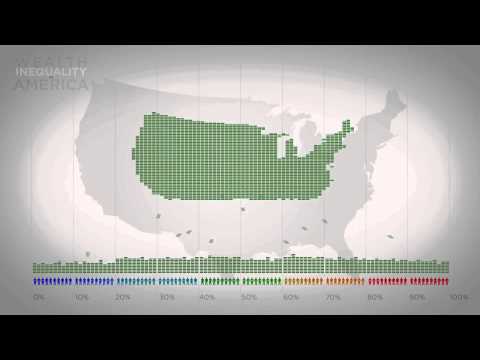
Martel:Since this is tangential to the op, I considered not posting it, but the thread has veered some anyway. What I find fascinating about this is that there is not only a perception of reality that is really far apart from reality, but that across the spectrum, there is an ideal that comes nowhere close to reality.I will say that I think the current American healthcare system is broken...mostly because it's not about healthcare anymore. Healthcare providers are simply cogs in the system at this point. At any rate, the video is about wealth distribution in America. It doesn't present every bit of information I might like to see, but it is pretty accurate as far as I can tell regarding its statistics.
xmacro: Martel:Since this is tangential to the op, I considered not posting it, but the thread has veered some anyway. What I find fascinating about this is that there is not only a perception of reality that is really far apart from reality, but that across the spectrum, there is an ideal that comes nowhere close to reality.I will say that I think the current American healthcare system is broken...mostly because it's not about healthcare anymore. Healthcare providers are simply cogs in the system at this point. At any rate, the video is about wealth distribution in America. It doesn't present every bit of information I might like to see, but it is pretty accurate as far as I can tell regarding its statistics. The biggest problems with video's like this, is that it's not quite honest. The video acts as if wealth in this nation is a zero sum game, that if someone has more money than someone else, then they must've taken it from that other personIn reality, wealth is being created all the time; the reason wealth is concentrated in the hands of a few is because it was mostly produced by those few. A poor person doesn't create anything - as has been said, "I've never seen a poor person create a job", whereas a business creates not only products, but jobs as well - wealth is created through them. A business doesn't redistribute wealth from X to Y, it creates an entirely new amount of wealth that it then spreads through its products and payroll; the products are distributed throughout the economy in the form of products, and the payroll is given to its employees - this is all new wealth, not taken from anyone, and yet the business will show up on that chart in the video as one of the top 20% or so, and the narrator will act as if the business took it from the bottom 20%.Take the example of Google or Apple - they create products that make your life better; where would we be if no one had created a user friendly interface for the tablet and made it mainstream? Or revolutionized the smartphone? What if Google hadn't made a better search engine? What if Apple hadn't created the Mac? The world would be the worse for it, yet by their work, both Apple and Google have not only added products that enrich peoples lives, they've made a fortune doing it - they didn't earn their billions by taking it from anyone, they created that wealth through their products, yet in that video, they'd show up as the top 1% and the narrator would treat them as if they stole it from the other 99%What's also left out is the tax side of things - the bottom 50% not only pays nothing, they get rebates - when tax season rolls around, the bottom 50% are paid by the top 50% of taxpayers. Additionally, the top 20% pay 72% of the taxes right now - taxes haven't been this high for the top 20% since the Carter Presidency and the stagflation years, yet you would never know that from the video.That's the problem with video's like that - wealth creation isn't a zero sum game, but it's treated as one by those with a propaganda agenda
clearlysuspect:Xmacro, I'm not wrong. Nor am I right. And the same is true for you. These are my opinions and the way I view the world. If you view it differently then I guess that's what makes this world special. I believe we're just viewing this from two very different perspectives.
clearlysuspect:I understand the arguement that capitalism and free market is the best thing we have going for us because other systems have failed in the past, but it's still an incredibly flawed system. It's a system that would allow a man to become so wealthy that he couldn't count his yachts in one sitting while children live on the streets and starve. I don't except that this is the "best system" just because we as humans haven't figured out how to evolve past it. If a system demands growth for growth sake, if it demands production of pointless goods for the sake of money and wealth, then I see that as a flawed system. I'm not saying we're failing as a nation for not seeing this, I'm saying we're failing as a species.
clearlysuspect:And just for further clarification, I don't hold the solutions. I'm not a smart man. I have my opinions of where we should be. I see humans starting to cover the globe like locusts, eating everything in their paths, consuming, wasting, littering, poluting, and all for the sake of growth and expansion and wealth. I don't think it's right. I think we need some big steps backward.
xmacro: clearlysuspect:Xmacro, I'm not wrong. Nor am I right. And the same is true for you. These are my opinions and the way I view the world. If you view it differently then I guess that's what makes this world special. I believe we're just viewing this from two very different perspectives. I disagree; one of us is right, the other is wrong. There is no way that two such divergent viewpoints can be compatible. I think the flaw in your idea is the way you view the economy and the way it grows, as a conglomerate, as a whole - it's really not. The economy of a nation is built on the household economies of each and every one of its citizens, it's only as strong or weak as its citizens' budgets are. When you get a raise, the entire economy prospers as a result; when you lose your job, the entire economy suffers as a result.The idea that we don't need to grow any more is the same as saying "I don't need to advance in my job anymore; I don't want any more raises in my pay" - it's absurd. Economies need to growThe idea that the economy is "too big" is subjective - there were people who said the US economy was too big in 1900, 1950, 1990, etc - and look, they were all wrong clearlysuspect:I understand the arguement that capitalism and free market is the best thing we have going for us because other systems have failed in the past, but it's still an incredibly flawed system. It's a system that would allow a man to become so wealthy that he couldn't count his yachts in one sitting while children live on the streets and starve. I don't except that this is the "best system" just because we as humans haven't figured out how to evolve past it. If a system demands growth for growth sake, if it demands production of pointless goods for the sake of money and wealth, then I see that as a flawed system. I'm not saying we're failing as a nation for not seeing this, I'm saying we're failing as a species. And you'd be wrong in this. You point to one hypothetical example, of a hypothetical "rich guy" who can't count his yachts while some hypothetical "poor guy" can't eat. I'm pointing to real world results, wherein poverty has fallen by 80% WORLDWIDE since the 1970's. I see real world results that have lifted BILLIONS people out of poverty and enriched lives, whereas you see singular examples and hypothetical what-ifs. clearlysuspect:And just for further clarification, I don't hold the solutions. I'm not a smart man. I have my opinions of where we should be. I see humans starting to cover the globe like locusts, eating everything in their paths, consuming, wasting, littering, poluting, and all for the sake of growth and expansion and wealth. I don't think it's right. I think we need some big steps backward. This view, the so called "population bomb" is old - I'm talking 1800's old. People have been saying we're reaching critical mass of populations for at least the past 100 years, and yet we're still here. People who've taken a dim or pessimistic view of humanity have been proven wrong time and again, yet the foolish notion persists.Humans aren't very well adapted to their environment; they don't have fur or claws, horns or hooves, yet they've conquered the earth. Why? Because we think, we invent, and we're not static. Our technology enables us to adapt to anything. 100 years ago, it was unheard of to receive news in less than a month after it occurred; today it's instant - do you think the people 100 years ago could possibly have envisioned the internet or email?Already, tech and pharmaceutica companies are working on the next generation of medicines and technologies - pills that contain all your nutritional needs for a day: what impact do you think that will have ON THE world hunger? Nanotechnology and genetic research that will allow the regeneration of lost limbs - what impact do you think that will have on the human condition?Naysayers and those with pessimistic viewpoints, who say the world is about to crumble are nothing new, and they've been proven wrong since the dawn of time. I'm telling you to buck up and take a longer view of history - things are never as bad as they seem, and humans have always found a way to change the world and themselves to improve things



![Stick out tongue [:P]](/cs/emoticons/emotion-4.gif)